Decluttering vs. Organizing vs. Maintaining
Why People Keep “Starting Over” With Their Stuff
Decluttering, organizing, and maintaining are often treated as if they’re the same activity. In everyday conversation people use the terms interchangeably, and most organizing advice tends to blend them together into a single process.
But they are not the same thing.
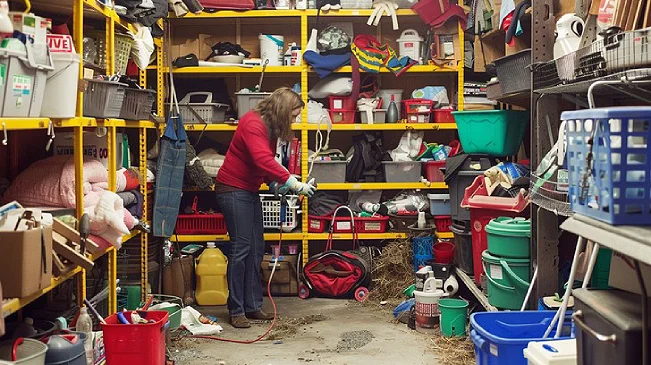
Confusing these three activities is one of the main reasons people feel like they are constantly starting over with their spaces. Many people have experienced some version of the same cycle. Things begin to accumulate over time, the mess slowly becomes frustrating, and eventually a decision is made to set aside a weekend to fix it. The result is usually productive in the short term: items are sorted through, drawers are straightened, and the space ends up looking noticeably better.
For a while, the system appears to work.
But gradually the same patterns begin to return. A few items are left on a surface instead of being put away. A drawer starts to collect things that don’t quite have a clear place. Over time the space drifts back toward the same level of clutter that existed before the organizing effort began.
When this happens, the most common explanation is that the system simply wasn’t maintained well enough. People assume they weren’t disciplined enough about putting things back or that they need a stricter organizing method next time.
That explanation assumes something important: that the original process was correct.
In many cases, the real issue is that the steps were performed out of order.
Decluttering, organizing, and maintaining solve three different problems. Each one requires a different mindset, different tools, and a different timeline. When these stages are blended together or approached in the wrong sequence, the results often feel temporary.
Looking at the process in stages makes the difference easier to understand.
You cannot maintain something that has not been organized. And organizing becomes difficult if the items involved have never been sorted in the first place.
Once that sequence becomes clear, many of the frustrations people experience with organizing start to make more sense.
---
The Step Most People Skip
Most organizing discussions focus on two steps: decluttering and organizing. However, there is an earlier stage that rarely receives much attention but plays an important role in making the other steps effective.
That step is sorting.
Sorting simply means grouping similar items together before making any decisions about what should stay or go. It is a straightforward process that focuses entirely on visibility rather than judgment.
For example, when cleaning out a closet, sorting would involve pulling everything out and grouping items by category. Shirts would be placed together, jackets together, and shoes together. The goal is not to decide what to keep yet but simply to see what exists.
Although this step sounds basic, it often produces an important shift in perspective.
When items are scattered across drawers, shelves, bags, and corners of a room, it can be difficult to understand how many of them actually exist. Once everything is grouped into categories, patterns that were previously invisible become obvious.
Someone might believe they only have a handful of pens until they see more than a hundred gathered in one place.
A person who assumes they own a single glue gun might discover several once tools are gathered together.
Sorting turns vague impressions about clutter into something concrete. Instead of relying on memory or assumptions, people can see the categories and quantities directly in front of them.
That clarity makes the next step much easier.
---
Decluttering: Reducing What Exists
Decluttering is the stage focused on reduction. Its purpose is to decide what should no longer remain in the space.
When people attempt to declutter without first sorting their items, the process can feel somewhat random. Decisions are made based on what happens to be in front of them at the moment rather than on a clear understanding of the overall category.
Sorting helps create the context needed to make better decisions.
When similar items are gathered together, it becomes easier to evaluate them. A person might discover that they own multiple versions of the same thing, such as several pairs of nearly identical leggings or stacks of containers that no longer have matching lids.
Seeing those items together makes it easier to determine which ones still serve a purpose and which ones no longer need to remain.
At that point decluttering becomes less about impulsively throwing things away and more about editing a collection. Items that are broken, unused, or unnecessary can be removed with more confidence because their role within the category is clearer.
Once this reduction has taken place, the space becomes much easier to work with.
---
Organizing: Giving Things a Place
Organizing is often the stage people are most excited about because it involves creating systems that make a space feel orderly and functional. However, organizing is not primarily about getting rid of items. Instead, it focuses on deciding where the remaining items should live.
This is the point where storage containers, drawer dividers, shelves, and labels can become useful tools. Unfortunately, many people attempt to start with these tools before completing the earlier steps.
Buying storage bins before sorting or decluttering tends to produce a familiar result: containers filled with a random assortment of objects that do not truly solve the underlying problem.
When organizing comes after sorting and decluttering, the process becomes more logical. At this stage, people know what they own and have already reduced the excess. Categories are clear, which makes it easier to assign practical homes to items.
Pens might live in one drawer, tools in another, and kitchen containers in a cabinet where they fit neatly together.
Organizing is essentially the act of assigning homes so that items can be found and returned easily.
Once those homes exist, maintaining the system becomes possible.
---
Maintaining: The Stage That Determines Whether Systems Last
Maintaining is the final stage of the process, and it often determines whether the earlier work continues to function over time.
Maintenance does not mean reorganizing everything repeatedly. Instead, it involves small habits that keep the system operating as intended. This might include putting items back in their designated places, occasionally resetting a space that has drifted out of order, and preventing categories from gradually mixing together again.
However, maintenance only works well when the earlier stages have been completed thoroughly.
If too many items remain after decluttering, maintaining the system will require constant effort. If items do not have clearly defined homes, putting things away becomes a guessing game. And if categories were never properly sorted, the system will gradually dissolve into piles again.
When these problems occur, people often conclude that they are simply not good at staying organized.
In reality, they were attempting to maintain a system that was never fully established in the first place.
---
Why the Order Matters
Each stage in this process addresses a different problem.
Sorting reveals what exists.
Decluttering reduces what is unnecessary.
Organizing assigns structure and location.
Maintaining preserves the system over time.
When the stages occur out of order, the results tend to feel temporary.
Someone might buy storage containers before reducing the number of items they own and end up storing things they did not actually need. Another person might attempt to maintain a system that never clearly defined where items belong. Someone else might declutter without sorting first and later realize they discarded something useful.
In each case the issue is not a lack of effort. It is a mismatch between the stage of the process and the action being taken.
---
The Goal Is Not Endless Organizing
Many organizing articles focus on the moment when a space looks perfectly arranged. Countertops are clear, drawers are neatly divided, and containers are labeled.
That moment can feel satisfying, but it is not the true goal.
The real measure of a system is whether it continues to function after everyday life begins again. Items are used, moved, and occasionally misplaced. New things enter the space.
A system that only works when everything has just been arranged is not truly stable.
Sorting helps create clarity about what exists. Decluttering reduces the amount of material that must be managed. Organizing assigns logical homes to what remains.
When those three steps are completed in the proper order, maintaining the system becomes far more manageable.
Once the sequence is clear, most clutter problems stop being confusing. They stop feeling like personal failures or endless organizing projects. What remains are straightforward choices about categories, limits, and placement—the kinds of decisions that are difficult to make when everything is mixed together, but surprisingly easy once the structure is visible.
Decluttering vs. Organizing vs. Maintaining
Decluttering, organizing, and maintaining are often treated as if they’re the same activity. In everyday conversation people use the terms interchangeably…
Share this post
Keep Reading
If you enjoyed the article above, here are more you might find interesting.
Don't Buy the Bins Yet
I reorganized two cabinets recently. Neither one was a crisis — but both had gotten to the point where finding anything required moving everything…
Read more →
The Great Cord Purge
Yesterday, the SADP method came knocking in the form of a wall-mounted power strip crisis. My father-in-law's model airplane collection has apparently…
Read more →
The Table Isn't The Problem
What was actually happening: executive dysfunction. Neurological. Not laziness. Not a choice. Not a character flaw dressed up as a lifestyle. I looked at…
Read more →