I Don’t Use To-Do Lists (Here’s What I Do Instead)
This usually surprises people.
In 2005, I went through a six-month stretch that included a full-time job, buying a business, buying a house, and welcoming a new baby. At no point during that time did I keep a formal to-do list.
Fast forward to now. The workload is significantly more complex — multiple projects running simultaneously, each at different stages, each with different requirements. Still no to-do list.
This is usually where someone jumps in with, “Well, you must be missing things,” or “That sounds stressful,” or my personal favorite, “You’d be even more productive if you just wrote it all down.”
Here’s the thing. I’ve tried to-do lists. I’ve tried apps. I’ve tried notebooks, whiteboards, daily planners, weekly planners, and productivity systems with names that sound like tech startups. They all fail me in the same way.
Not because I am disorganized.
Because they work against how my brain actually operates.
This isn’t a flex. It is a confession.
---
Why To-Do Lists Don’t Work for Me
Most to-do lists create a visual inventory of everything that isn’t done yet. That’s the point. That’s also the problem.
For my brain, seeing the full list doesn’t create clarity. It creates pressure.
The list never feels like it goes down. Even when items are completed, new ones appear. The act of writing something down as a task turns it into a promise, whether I intended that or not. Suddenly I’m not just aware of the work. I’m negotiating with it.
The common advice is to “just pick the top two or three items.” But that ignores the real issue. The stress isn’t caused by the number of items I’m working on. It’s caused by the awareness of everything else sitting there, waiting.
That constant background noise doesn’t motivate me. It drains me.
The anxiety comes before the action. And once anxiety shows up, execution slows down.
---
What I Actually Do Instead
I rely on mental prioritization.
Every morning, and often multiple times a day, I do a quick internal scan. What’s the most urgent thing right now. What’s the most important thing right now. What’s the one thing that, if ignored, will cause friction later.
I don’t need a list for this. My brain already knows. It’s been tracking these priorities in the background the whole time.
This works because I’m outcome-focused, not progress-focused. I care about finished things, not the illusion of movement. Checking a box does nothing for me. Completing a task and removing it from my mental load does.
This approach also handles sudden priority shifts without breaking. For instance, I had a clear plan one Sunday right up until I spotted a leak under the kitchen sink. Two, actually.
Instantly, the rest of the day’s tasks fell away. Not because they weren’t important, but because they were no longer relevant. A leaking sink outranked everything. The leaks got fixed. The rest moved to Monday.
I also rely heavily on context-based work. When I sit down to work on something, I don’t open a list. I open the environment where I left off. That might be a document, a design file, a workspace, or now, a dedicated AI chat tied to a specific project.
The context tells me what needs to happen next. I don’t need to be reminded.
---
The Role of Reference Systems
This is where people assume I'm keeping everything in my head. I'm not.
I don't store tasks externally. I store reference information. Numbers, details, decisions already made, notes I'll need later.
That information lives outside my head so my brain can do what it's good at — prioritization, pattern recognition, and execution.
A task list tries to be both a reminder and a reference system. For me, that hybrid role is where it breaks.
Tasks stay internal. Reference stays external. Keeping those two things separate is what makes it work.
---
Dedicated Spaces Matter More Than Lists
Another thing that makes this work is separation.
Each project has its own space. In the past, that meant physical areas — a folder, a notebook, a section of the desk. Now it's more likely to be a dedicated document, workspace, or AI chat tied to that project.
When I enter that space, my brain switches modes. The unfinished work is already visible. I know where I left off. I don't need a checklist to reconstruct it.
This reduces friction. It also prevents cross-contamination, where unrelated tasks compete for attention simply because they share a list.
One space. One project. One mental mode.
---
Dopamine Comes From Completion, Not Tracking
This is an important distinction.
Some people get motivation from checking boxes. That visible progress gives them momentum. I’m not wired that way.
My dopamine comes from finishing something and feeling it leave my system. From knowing a problem no longer exists. From closure.
A to-do list delays that feeling by constantly reminding me of everything that’s still open. Even when progress is happening, it feels like loss instead of gain.
That isn’t a discipline issue. That is a feedback loop issue.
---
The Bigger Point ISO Keeps Making
This is NOT about lists versus no lists.
It’s about compatibility.
Most productivity advice assumes a single model of how focus, motivation, and memory work. If that model doesn’t fit you, the conclusion is always the same. Try harder. Be more disciplined. Build better habits.
That’s backwards.
If your system creates more friction than it removes, it’s the wrong system. Period.
My time and work organization is cognitive, not visual. My execution is driven by urgency and importance, not by reminders. My brain already knows what matters. My tools exist to support that, not override it.
---
The Permission Most People Need
If your current system works, even if it looks “wrong” to someone else, stop trying to replace it.
You don’t need an app to tell you what’s important. You don’t need a list to validate that you’re doing real work. You don’t need to externalize everything just because someone else’s brain requires it.
ISO is not anti-tools. It’s anti-forcing yourself into tools that fight you.
The goal isn’t to look organized.
The goal is to execute.
And sometimes the most organized thing you can do is trust how you already work, then build around that instead of against it.
I Don’t Use To-Do Lists (Here’s What I Do Instead)
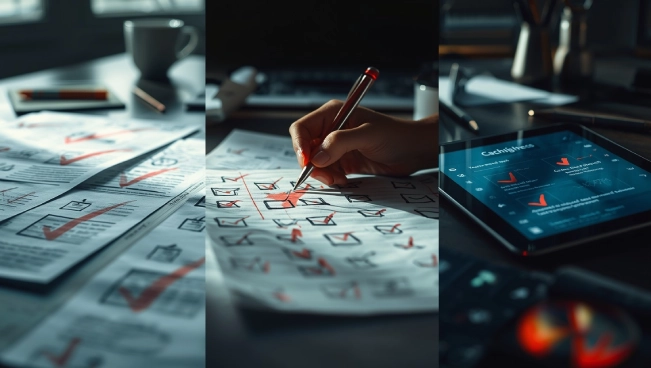
Most to-do lists create a visual inventory of everything that isn’t done yet. That’s the point. That’s also the problem. For my brain, seeing the full list…
Share this post
Keep Reading
If you enjoyed the article above, here are more you might find interesting.

Why I Organize (And Why Your Reasons Aren't That Different)
I can't tell you why you should organize. That's not how this works. Motivation is personal. What gets one person moving through a cluttered garage...
Read more →
The LEGO Lesson
In The Lego Movie, there's a scene where Will Ferrell's basement workshop is lined with drawer units—every piece perfectly sorted by size, shape, and…
Read more →
Welcome to ISO
In Sort Order is built around one core idea: Order is the natural state of everything. Chaos is what happens when systems break down. Your job isn't to…
Read more →