Sorting Isn't Simple. It's Just Simpler Than Everything at Once.
There's a claim that’s often made about organizing frameworks - including this one - that I've been guilty of overstating. The claim is that sorting removes the decision-making burden. That SADP simplifies things by breaking the process into steps, and that those steps feel almost automatic once you understand them.
My wife corrected me on that recently, and she had a good point.
---
We were talking about an article she'd sent me. It was built around the idea that chronic disorganization is a neural pattern, a decision loop that gets stronger every time you walk away from a mess. The underlying concept is legitimate. The article's solution was an app subscription wrapped in fabricated Finnish neuroscience, but that core observation - disorganized people aren't lazy, but they are caught in a loop they don't know how to exit – that part is real.
One detail in the article bothered both of us. On day four of the program, the author is told to clear a surface. Don't sort. Don't organize. Just clear. She chooses her dining room table and finishes in eight minutes.
My wife's response was immediate, if sardonic: give her a big enough box and she could clear any table in eight minutes, all without a single real decision. Move everything into the box, surface is clear, problem has been relocated. That's not organizing, it’s just giving the loop a different shape.
Clearing and sorting are not the same thing. That article treated them as equivalent, as do many others, but they really, really aren't.
---
What my wife said next was the part I’ve been thinking about ever since.
She told me that sorting is decision making. Not the simplified, frictionless process I sometimes describe it as, but actual decision making with real cognitive weight, especially for a brain that runs the way hers does.
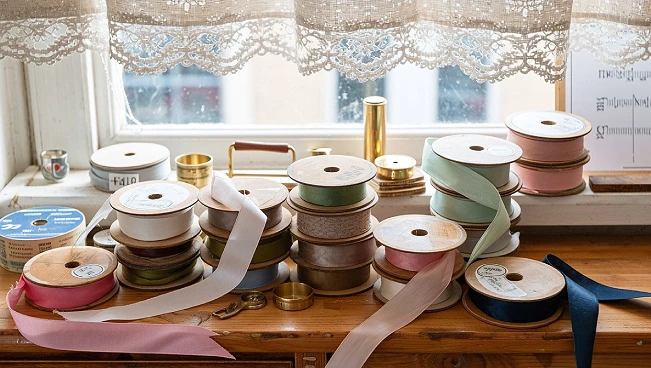
When she's sorting, she's not just answering one question per item. She's managing a cascade. An item gets picked up and the primary question arrives: what category does this belong to? But immediately alongside it, and sometimes louder, come the others. Do I want to keep this? Could this be fixed? Would someone else want this? Can it be donated? Is this its own category, or a subcategory of something else? Pink ribbon – is that crafting, or ribbon, or is it specifically pink ribbon because there's enough of it to warrant its own bin?
Each of those questions is valid. Each of them will eventually need to be answered. But answering all of them simultaneously, for every item, while trying to design a category structure from scratch, is exactly the kind of multi-layer processing that creates the feedback loop the article was describing. Her mind is very quickly exhausted, and she shuts down until she can muster enough energy to re-engage.
What SADP actually does, and this is more accurate than "removes decisions," is to layer those decisions sequentially. Sort first. Assess after. Decide once you have visibility. Place when you know where things belong. One layer at a time, in an order that means each layer has more information than the last.
That's different from facing everything at once. But it's definitely not the same as no decisions.
---
Let me explain what the sort layer actually looks like when it's done properly, because this is where a lot of confusion can happen.
Sorting doesn't stop at the first pass. The first pass just establishes broad top-level categories, and the rule of thumb is to keep those broad. Five or fewer major groupings at the start. Not because more is wrong, but because more makes the first pass unmanageable. The goal at the top level is large, general buckets: crafting, office supplies, kitchen items, clothing, miscellaneous. The specifics will get resolved later, I promise.
After the top-level sort, each major category gets its own individual second pass. This is the subcategory sort. Crafting breaks down into ribbon, paint, fabric, tools. Office supplies break down into paper, writing implements, folders, electronics. Each subcategory is determined by looking at what's actually in the pile, not by planning it in advance. The categories reveal themselves through the sorting. This is really important, because it means that each person’s subcategories will be unique, and that’s as it should be. Group things the way they will work for you.
Depending on the size of the collection and how organized the person wants or needs to be, there can be a third sort beyond that. Ribbon breaks down by color, or by style, or by size. Writing implements break down into pens, pencils, markers, highlighters. Each level of drill-down is driven by what's there and what makes sense for how the items are used.
This is why I can defer the pink ribbon question during the first sort. I know the subcategory pass is coming. I've done it enough times to trust that granular questions get answered in the second or third sort, not the first. So when the pink ribbon question surfaces during the top-level pass, I can set it aside, into general crafting, without anxiety because I know where it goes in the process.
My wife doesn't have that same experiential trust yet. Her brain surfaces the subcategory question at the top level because it doesn't yet know there's another pass coming that will handle it. So she tries to resolve it immediately, which means she's attempting to build five or six levels of category structure simultaneously instead of one at a time. That doesn’t make this an ADHD problem – it’s an experience problem. Anyone new to the process might do the same thing.
---
My wife described how she works through that ongoing cascade of questions once she understands the drill-down that is coming. When she's sorting and her brain surfaces one of those other questions, she doesn't suppress it. She acknowledges it, notes it, and then gently redirects herself back to the current layer. We're just sorting top-level categories right now. That other question is valid, and it gets answered in the next pass, but that's not what we're doing at this moment.
I used the word "forcing" when she described this. She pushed back immediately, because forcing implies resistance, fighting against opposition. Her brain at war with itself. What she is working towards is gentler than that, more like guidance. Acknowledging the noise, not fighting it, but continually returning back to center.
That practice takes real effort, even if it's invisible from the outside. The sorting looks the same whether your brain is running one track or five. But the experience of it can be completely different, and the energy cost is higher when you're managing the background noise alongside the foreground task.
My experience of sorting is different. I move through categories quickly. The other questions arise for me too, but I've developed a faster reflex for deferring them. I know the keep-or-discard question is easier to answer after I can see the full category. So I set it aside, not because I've suppressed it, but because I've learned through enough repetition that waiting produces a better answer.
That's not a superior way of processing. It's a more practiced one, developed over years of working through spaces and seeing how the drill-down unfolds. The questions are probably the same, but the routing is faster.
The truth of the matter is that my brain and my wife’s do not work exactly the same. It may be that no matter how much practice and trust she invests in the process, her routing may always run more slowly because her brain handles competing inputs differently. For some people, sorting one layer at a time feels like peaceful relief. For others, it feels like they’re still managing an endless internal conversation, but at least they have a reference sheet of talking points to use while they do it. Both of those experiences are real, and neither of them means the framework isn't working.
---
If sorting feels harder than it should, the most useful adjustment isn't to push harder and barrel through. Instead, try to narrow your scope deliberately.
Keep your top-level categories broad. Five or fewer. Resist the pull toward specifics in the first pass because specificity is what the second and third sort are for. When a subcategory question surfaces during the first pass, the answer is: that's a good question, and we’ll handle it in the next layer. Not ignored. Deferred. There's a difference.
The gentle returning my wife described isn't a workaround for a broken process. It is the process for a brain that experiences all the layers simultaneously rather than sequentially. The goal is the same. The path through it takes longer and costs more, and that's worth acknowledging honestly rather than papering over with a promise that sorting is simple.
It isn't simple. It's just simpler than doing everything at once. And for most people, in most spaces, that turns out to be enough.
Sorting Isn't Simple - Just Simpler Than Everything at Once.
There's a claim that’s often made about organizing frameworks - including this one - that I've been guilty of overstating. The claim is that sorting…
Share this post
Keep Reading
If you enjoyed the article above, here are more you might find interesting.

Being the Hardest Worker in the Room Isn’t Enough
Dwayne Johnson is known for the mantra, “Be the hardest worker in the room.” It’s a line that lands well because it appeals to something most of us...
Read more →
Ambiguity Is the Enemy of Execution
For most of us, the biggest hurdle to starting anything isn’t laziness or lack of motivation. It’s the questions that immediately pop up before we ever…
Read more →
Where Do You Start? Anywhere That's Calling You.
It's one of the most common questions in organizing. Where do I start? The honest answer is that it depends — and not in the way that feels like a…
Read more →