Sometimes the Best Thing You Can Do Is Ask a Question
My wife needed flowers.
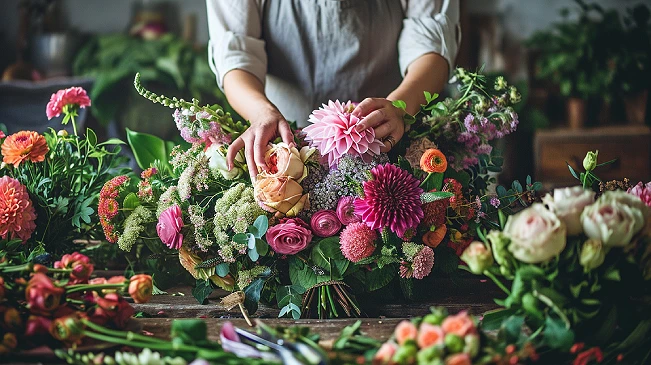
Her niece is graduating and she wanted to build a bouquet — fake flowers, her specialty — as a gift. The flowers live in the craft storage room in our backyard. It's a small space, a former sauna that had its guts ripped out before we moved in, about ten by twenty feet. It's been getting better. She's been slowly working through it her way, applying some ISO principles adjusted for how her brain works. But the honest description of that room on any given day is that when you open the door, you have to squeeze in.
So on Saturday we went out to get the flowers.
---
She slid into the room and started handing things out to me — bins, boxes, white garbage bags full of flowers, whatever she could reach as she dug through the layers. We pulled some things away from the door just to get to the rest. By the time she stepped out, there was a significant pile in front of us and she already looked overwhelmed. Several bins, several bags, more than she'd expected.
She also recognized — correctly — that since everything was already out, this was the moment to organize it before putting it back. I agreed. And I offered to handle returning what wasn't coming into the house so she could get started on her part of the project. She accepted and headed inside.
That left me outside with a pile of bins, some loose items, and a storage room that needed attention.
I didn't just throw it back in and close the door. I have a personal rule that's served me well over the years: leave a place better than you found it. So I did a quick sort of what was there — consolidated like items into boxes that already held that category, shifted the layout near the entrance, restacked things into a smaller footprint, moved pieces that were blocking the path. Nothing dramatic. Maybe twenty minutes of work.
When I was done, you could walk into the room without squeezing. There was even a little room to move around. I knew the bins coming back in from the house wouldn't cause a problem — properly consolidated, they'd fit without creating a new jam at the door.
I closed the door and went inside. I didn't say a word to my wife about what I'd done.
---
Later that day she came to find me. She'd gotten a certain distance into the flower organizing project and had hit a wall. She was stuck, overwhelmed, and not sure what to do next.
A previous version of me might have walked in, assessed the situation, and told her what to do. That approach has a reliable track record of not working. So instead I sat down and asked questions.
How was she categorizing the flowers? By color. Which color was the largest category? Pink, by far. Which was the smallest? Gold and silver together. What size bins was she using for each? That's where the pressure was — she wasn't sure the bins she'd chosen were going to be big enough, and she was worried about what would happen when the rest of the flowers came in from the storage room.
That last part was the real issue — but not in the way I first read it.
She wasn't just worried about space. She'd internalized something from the ISO approach: when you're organizing a category, you want all of it together so you can see what you actually have in total. She'd taken that to heart. And now she was feeling the tension between doing it right and being completely overwhelmed by the scope of doing it all at once. She wasn't skipping a step. She was stressed at the thought she might be.
I had to tell her that she wasn't doing it wrong. The principle still held. All of a category together is still the goal. But "all at once" and "all of it" aren't the same thing. Working in stages — getting what was in front of her sorted and settled first, then bringing in the rest to integrate — would get her to the same place. It would just take a bit longer and that was completely fine. The overwhelm wasn't a sign that the approach was wrong. It was a sign that the scope needed to be broken into pieces she could actually move through.
That's an important distinction to keep in mind. Understanding a principle and being able to execute it at full scale in one sitting are two different things. The goal is always to get there. How you get there can flex.
My recommendation to her then was: stop. Don't bring anything else in yet. Work with what's in front of you. Get each color category into the bin that looks like it will hold what's there — the largest bin for pink, the smallest for gold and silver, the rest distributed accordingly. It didn't need to be perfect. It didn't need to be completely finished. It just needed to be far enough along that when the remaining flowers came in, they could be sorted into their respective categories and the final bin sizing decisions could be made with full information.
She nodded. That made sense. And that's how it went.
---
By the following day she had brought in the remaining flowers on her own and was breaking them down into their categories. She asked for my input on a few newer flower types that didn't have an obvious home — colors that worked with others but didn't fit cleanly into the existing categories. After a short conversation I reminded her that there were several empty plastic bins still in the storage room. I'd consolidated a few boxes the day before and freed them up. We grabbed what she needed, and she proceeded to sort and store the rest based on size and category.
The project is mostly done. Some smaller details still to work out and everything needs to go back out into the storage room. But the process was faster and less painful than it had ever been before.
Two things made that possible.
I've gotten much better at listening first. At asking questions to understand where she is and where she needs to get to, rather than walking in with a diagnosis and a plan before I know what the actual problem is. The directive approach — "just do it this way, it's not complicated" — has never worked and I've finally stopped reaching for it.
And she's gotten much better at asking for help when she needs it. At accepting input without feeling like she's being judged, or told she's wrong, or sentenced to a life of organized chaos that doesn't suit her. That shift took time on both sides. It didn't happen because one of us decided to try harder. It happened because we've both learned — slowly, through a lot of trial and friction — how to have these conversations differently.
---
There's a postscript to this story.
The morning she went out to bring in the rest of the flowers, she came back inside and told me what had happened when she opened the storage room door.
She gasped.
She could walk in. No squeezing, no moving things out of the way first, no navigating around bins stacked at the entrance. Just open the door and walk in. She was careful to tell me she wasn't mad — happy, actually — but she was shocked. The change was bigger than she'd expected and she hadn't known it was coming.
She's right that change can be hard to accept even when it's change for the better. Especially in shared spaces. Especially when someone has been living with a limitation long enough that working around it has become automatic. The workaround disappears and for a moment the brain doesn't know what to do with the absence of the obstacle.
It also reinforced something I've come to believe more firmly over time: the problem isn't always the volume of stuff. Sometimes it's how the space is being used. The storage room didn't need to be emptied. It needed twenty minutes of consolidation and a better footprint. The flower project didn't need fewer flowers. It needed a conversation that reframed the sequence.
The stuff wasn't the problem. The approach to the stuff was the problem.
And sometimes all it takes to find the right approach is someone willing to ask a question instead of hand down an answer.
Sometimes the Best Thing You Can Do Is Ask a Question
She slid into the room and started handing things out to me — bins, boxes, white garbage bags full of flowers, whatever she could reach as she dug…
Share this post
Keep Reading
If you enjoyed the article above, here are more you might find interesting.

What Are You Really Keeping It For?
The books came from a specific period in my life — the years between businesses, when I was in transition and accumulating things that felt like preparation…
Read more →
Welcome to ISO
In Sort Order is built around one core idea: Order is the natural state of everything. Chaos is what happens when systems break down. Your job isn't to…
Read more →
Minimalism Isn't the Only Answer
If you're someone who feels pressured to adopt minimalism just because it's trendy, don't. Decluttering and organizing are personal. The goal isn't a look…
Read more →