The Day I Learned Minimalism Isn't the Only Answer
My father passed away recently.
We didn't have much of a relationship. He left when I was two, and I only saw him a handful of times after that. So when I was asked to settle his affairs, I had no idea what I was headed into.
What I found was a man defined by his things.
---
The House
His house was packed with stuff.
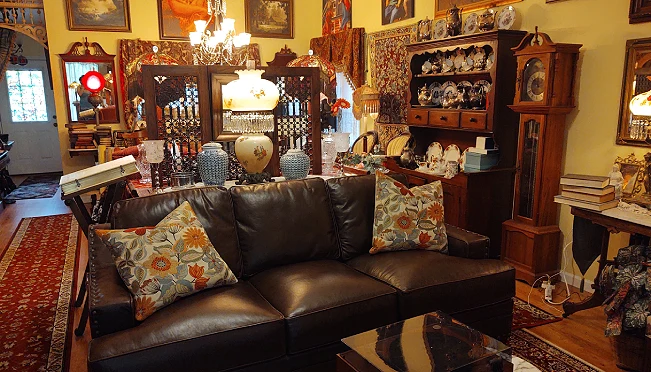
Heavy antique furniture. Displays of fine china and crystal. Persian rugs. Shelves of books. Paintings. Statues. Lamps. Cabinets full of knick-knacks and doilies.
It was dense, overwhelming, and the furthest thing imaginable from the airy "minimalist dream home" you see on Pinterest.
And yet...it worked.
Once I cleaned the kitchen and sorted the obviously out-of-place stuff, I realized something: his house felt warm. Comforting. Like being hugged.
The fullness wasn't chaos—it was personality. It told me more about who he was than the few words we'd ever exchanged.
That was a turning point for me.
---
Minimalism Is Not the Only Answer
You'll see countless blogs, TikToks, and Instagram posts telling you that happiness comes from bare counters, white walls, and three pieces of furniture.
And if that makes you feel calm? Great. Go for it.
But if you're someone who feels comforted by shelves full of books, layered rugs, or walls covered in art, you don't have to strip all that away to feel like you've "done it right."
The real key isn't minimalism.
It's maintenance.
If you love being surrounded by stuff, that's fine—but it still needs to be organized. You need systems to keep clutter from piling up, to make sure the mail gets handled, and the stacks of books don't take over every surface.
Otherwise, it slips from "comforting abundance" into something else entirely.
And I know this because of what I found in his garage.
---
The Garage
My dad, despite his uncanny ability to make an excess of furniture and knick-knacks work in some bizarre yet graceful way, still struggled with organization.
How do I know?
His garage was an absolute disaster.
When I first opened the garage door, there was barely room to step inside without twisting myself sideways. It was packed with furniture, lighting, books, tools, carpentry materials, artwork, and so much more.
Now, I couldn't hold the state of his garage entirely against him. He'd been in failing health for years—cancer diagnosis, treatment, remission, then a sudden resurgence. I had to assume the clutter was partly a result of survival mode: buying what he needed or wanted, dropping it in the first open spot, and telling himself he'd deal with it later.
Either way, it now had to be cleaned out.
So I applied the SADP method and got started.
---
Sort First
I pulled out as much as I could—which was a lot—and began sorting.
Tools. Furniture (including a full couch, multiple tables). Lighting. Materials. Hardware. Books. Pictures.
No decisions yet. Just grouping like with like.
---
Assess What You Have
From there, I broke down the tools, materials, and hardware into subcategories.
Screwdrivers. Nails. Sandpaper. Paint supplies. Carpentry tools.
Now I could see what I was actually working with.
Turns out, he had duplicates of almost everything. Not because he was hoarding, but because he couldn't find what he had, so he'd buy another.
Sound familiar?
---
Decide What Stays
Here's the surprising part: I really didn't throw out much.
Aside from a small pile of true trash—broken tools, expired materials, actual garbage—I kept almost everything.
Because once it was sorted and I could see what was there, it became clear that most of it had a purpose. He was a woodworker. He collected antique light fixtures. He loved books.
This wasn't random clutter. It was the raw materials for his hobbies.
The problem wasn't that he had too much. The problem was that it was all piled in one chaotic mass.
---
Place It Where It Works
I put the tools and materials away into both existing and newly created storage spaces. The rest of the items—furniture, lighting, books—I grouped and packed neatly at the back of the garage.
By the time I finished, I'd opened up almost half of the garage into working space.
And then we had to pick up a love seat and two leather chairs with footstools that he'd purchased just before passing away.
They fit. With room to spare.
I had actually managed to bring even more into the garage while still creating space.
---
The Lesson
So while my initial reaction was horror, it turned out that much of the chaos was just inefficient use of space.
Had he lived to return home, he'd have had a workable garage again—plenty of room to keep building furniture.
Now, does that mean keeping everything was a good idea?
No.
He had way more furniture—nice furniture—than one man could ever use. Enough antique light fixtures to fill three houses. Sixty-eight boxes of books were stacked in the garage, in addition to over a thousand books already inside the house, where he was converting the guest room into a library.
All of it was far more than anyone really needed.
But here's the truth: he loved it.
The furniture. The lights. The books. The process of collecting and rearranging. From old photos, it appears that he rotated things in and out of display over time.
For him, it wasn't clutter—it was joy and beauty and art.
---
Abundance vs. Chaos
There's a line between comforting abundance and actual hoarding.
And that line is organization.
My dad's house stayed on the right side of that line. His garage didn't.
Not because he had too much stuff, but because the garage lacked systems. When life got hard and his health failed, the garage became the dumping ground. Everything went there with the intention of "I'll deal with it later."
But later never came.
The house, on the other hand, had systems. Everything had a place. The books were shelved. The furniture was arranged. The knick-knacks were displayed, not piled.
That's the difference.
---
You Don't Have to Minimize to Organize
If you're someone who feels pressured to adopt minimalism just because it's trendy, don't.
Decluttering and organizing are personal. The goal isn't a look—it's a life that works for you.
Could my dad have parted with some things? Absolutely.
But he also made a lot of it work, and it brought him happiness.
So maybe your home looks like a magazine spread. Or maybe it looks like my dad's: dense, layered, eclectic, full.
Either way, the question isn't how much you own.
The real question is: does it work for you, and can you keep it working?
Because organizing isn't about following trends.
It's about creating a space where you can breathe—whether that space is sparse or abundant.
The journey is yours to take.
And there are no right or wrong answers.
Minimalism Isn't the Only Answer
If you're someone who feels pressured to adopt minimalism just because it's trendy, don't. Decluttering and organizing are personal. The goal isn't a look…
Share this post
Keep Reading
If you enjoyed the article above, here are more you might find interesting.
You Can't Declutter Your Way Out of This
I rewatched a documentary recently called Buy Now! The Shopping Conspiracy on Netflix. The examples are hard to forget — mountains of discarded…
Read more →
The LEGO Lesson
In The Lego Movie, there's a scene where Will Ferrell's basement workshop is lined with drawer units—every piece perfectly sorted by size, shape, and…
Read more →
A Step-by-Step Guide to the ISO Process
Most organizing advice skips from the problem straight to the result. Clear the counter. Empty the closet. Fill the bins. The assumption is that…
Read more →